
Prepping for Emergencies: What This Month’s Infrastructure Warnings Mean for Your Family
Federal agencies are warning about attacks on refrigeration, water and energy control systems. Here’s how to plan for multi-day outages, and keep talking when the phones don’t work.
This month the federal government put out another warning that should get every household thinking about what happens when the things we take for granted stop working. You don't need to panic. You do need a plan, and it should work when the power, the internet and the cell network don't.
What the agencies are warning about
Refrigeration and cold-chain systems (November 5, 2026). CISA, the FBI, HHS, USDA and DOT issued a joint fact sheet about ongoing attacks on industrial refrigeration and cold-chain monitoring systems. Attackers are going after internet-exposed temperature controllers in grocery stores and cold storage. The agencies warn they "could change the temperature and possibly cause physical impacts such as fire hazards." Healthcare, food and agriculture, chemical and transportation are the sectors most exposed. The warning follows attacks in Europe that hit more than 100 stores across several countries. In France, a blood establishment confirmed that a cybersecurity incident had changed refrigeration settings at three facilities. The US hasn't attributed the attacks to anyone yet.
Industrial controllers in water and energy (April 2026, updated July). Advisory AA26-097A, from the FBI, CISA, NSA, EPA, DOE and others, describes Iranian-affiliated actors exploiting internet-facing programmable logic controllers (PLCs). These are the small computers that run pumps, valves and other equipment across US critical infrastructure. The agencies report operational disruptions and financial losses at multiple organizations.
The power grid itself. A senior Energy Department official told Semafor this year that the grid is growing more vulnerable to cyberattacks. He worried that intruders might be lying in wait to strike at a time of their choosing. Physical attacks on substations remain a concern too.
None of this means the lights are about to go out nationwide. It does mean that a local outage lasting days, a water boil notice or empty grocery shelves are realistic things to plan for. The cause could be a cyberattack, a storm or a failing transformer. Your plan is the same either way.
The basics: two weeks, not two days
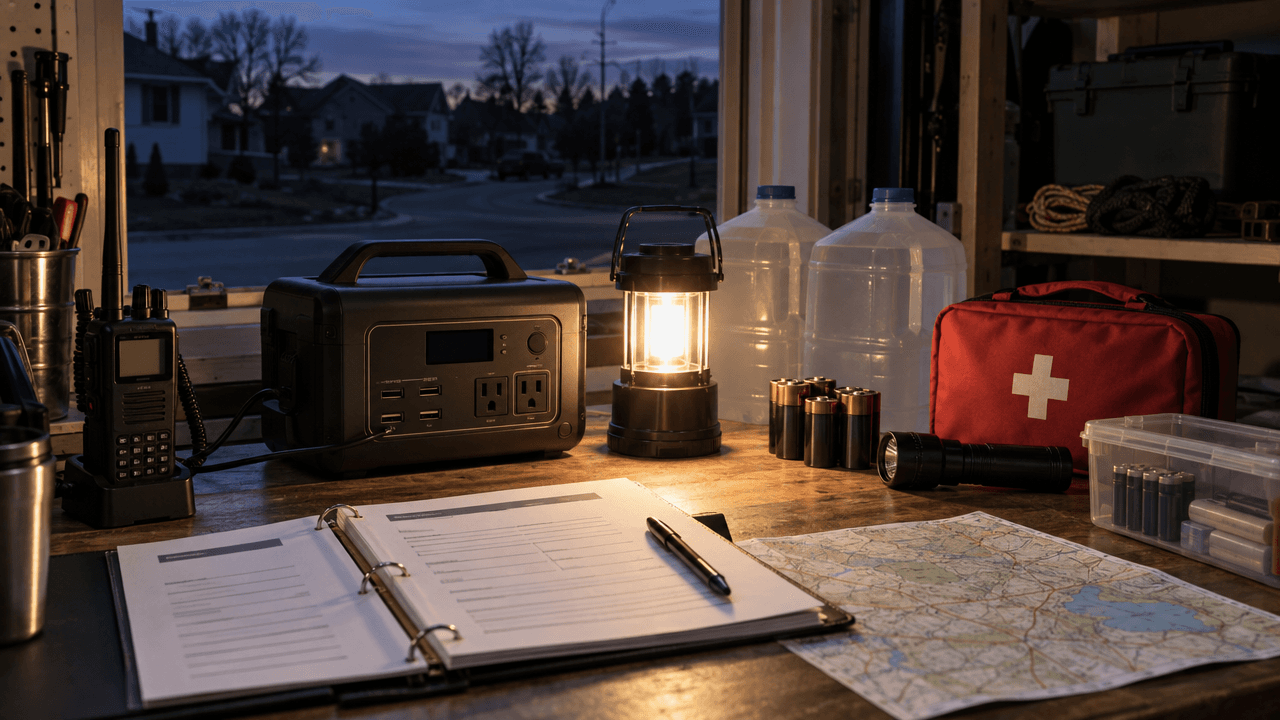
FEMA's Ready.gov kit list is a good baseline. It plans for several days; I'd aim for two weeks if you can manage it:
- Water: one gallon per person per day, plus extra for pets. Store it in sealed containers and rotate it every six months.
- Food that doesn't need a fridge: canned goods, rice, beans, peanut butter. Keep a manual can opener. If cold-chain attacks are in the news, plan to go a week without a working fridge.
- Medications: a two-week supply where you can get one, a written list of doses, and a cooler plan for anything that has to stay cold.
- Power: a battery power station or a properly ventilated generator, plus spare batteries, LED lanterns and a hand-crank or solar charger. Never run a generator indoors or in a garage.
- Cash: card readers and ATMs stop when the network does.
- Paper copies: IDs, insurance, prescriptions and phone numbers. Your phone's contact list is useless when its battery is dead.
- First aid and sanitation: a stocked kit, trash bags, bleach, and a plan for toilets if water pressure drops.
Communications: the part most people skip
This is where ham radio comes in. When the cell network is down or overloaded, a group with radios and a plan can still check in, share news and ask for help.
- Know your layers. Use a PACE plan: Primary, Alternate, Contingency, Emergency. For example: cell or text first, then GMRS, then a local 2 m ham simplex frequency, then a Meshtastic mesh or a runner to a rally point.
- Write it down. Frequencies, call signs, check-in times and rally points should be on paper, in every go-bag and by every radio.
- Practice. A plan you've never tested is a guess. Run a short weekly net, even if it's just three households checking in.
- Listen for official information. A NOAA Weather Radio and your county's ARES/SKYWARN net are your best sources of local information during an emergency.
- Get licensed. The Technician license is one multiple-choice test. GMRS needs no test, and one license covers your whole family.
Start with DexNet
I put together DexNet, a free, printable communications plan built for exactly this. It has a PACE worksheet, a frequency reference, a member roster, a net script and check-in format, message forms, a net log, a go-kit checklist and a page for your local resources. Every blank is meant to be filled in by your own group for your own area. Download it, sit down with your family or neighbors, and fill it in together.
This week's to-do list
- Store a gallon of water per person per day for two weeks
- Check medications and write down doses
- Charge every power bank and test your lanterns
- Print DexNet and fill in your PACE plan
- Program your group's frequencies into every radio
- Schedule your first practice net
Stay calm, stay prepared, and I'll hear you on the air.
73, KX3DEX
More in General

How Amateur Radio points to a globe-shaped Earth
Ham radio isn’t “a proof” in the math-theorem sense, but it is a hands-on laboratory. With nothing more than common gear—an HF rig, a VHF/UHF radio, a simple antenna, and (optionally) an SDR—you can…
Read post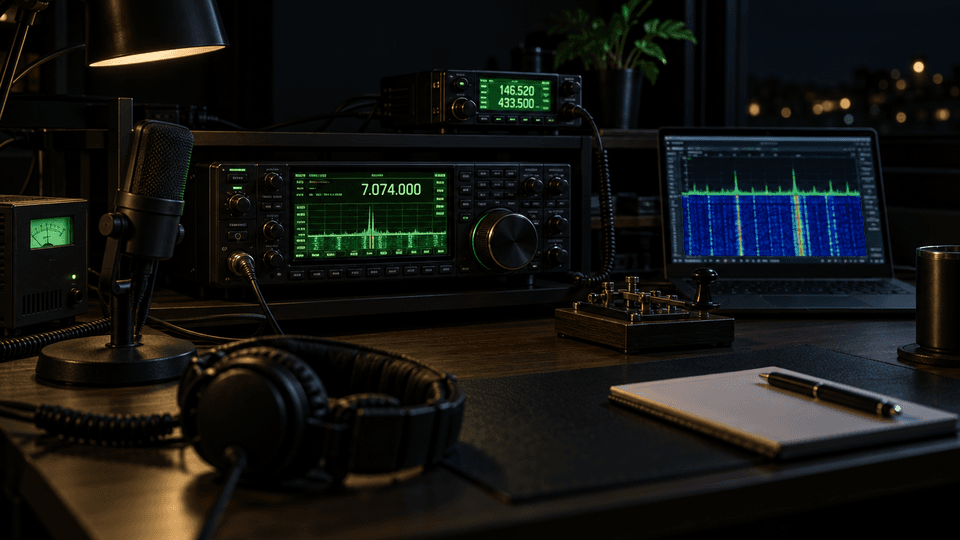
Planning Your Ham Shack: A Practical Guide
A good ham shack isn’t defined by how expensive your radio is it’s defined by how easy it is to operate, how quiet (RF-wise) it is, and how comfortable you can be for those “one more contact”…
Read post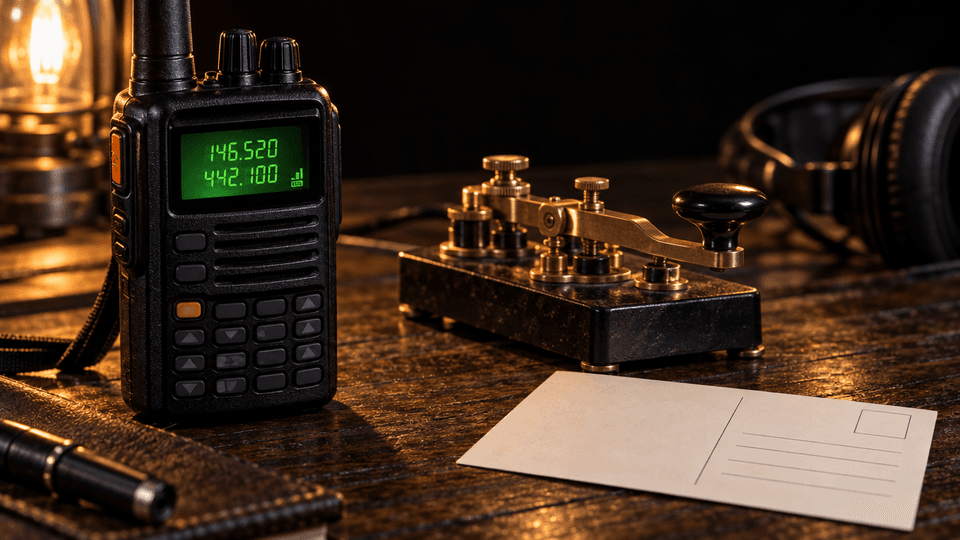
Welcome to my page!
Welcome to the KX3DEX.RADIO page — a place where I will post everything from HF, VHF, UHF and beyond. Whether you’re a brand-new operator still learning the phonetics and S-meter, a seasoned…
Read post